Contents
- Key Details About the UNESCO Youth Hackathon 2026
- What is the UNESCO Youth Hackathon 2026?
- UNESCO Youth Hackathon 2026 Theme
- Benefits of the UNESCO Youth Hackathon 2026
- Who Can Apply?
- What Type of Projects Can Be Submitted?
- Required Documents and Submission Materials
- Selection Criteria
- Important Dates
- How to Apply for the UNESCO Youth Hackathon 2026
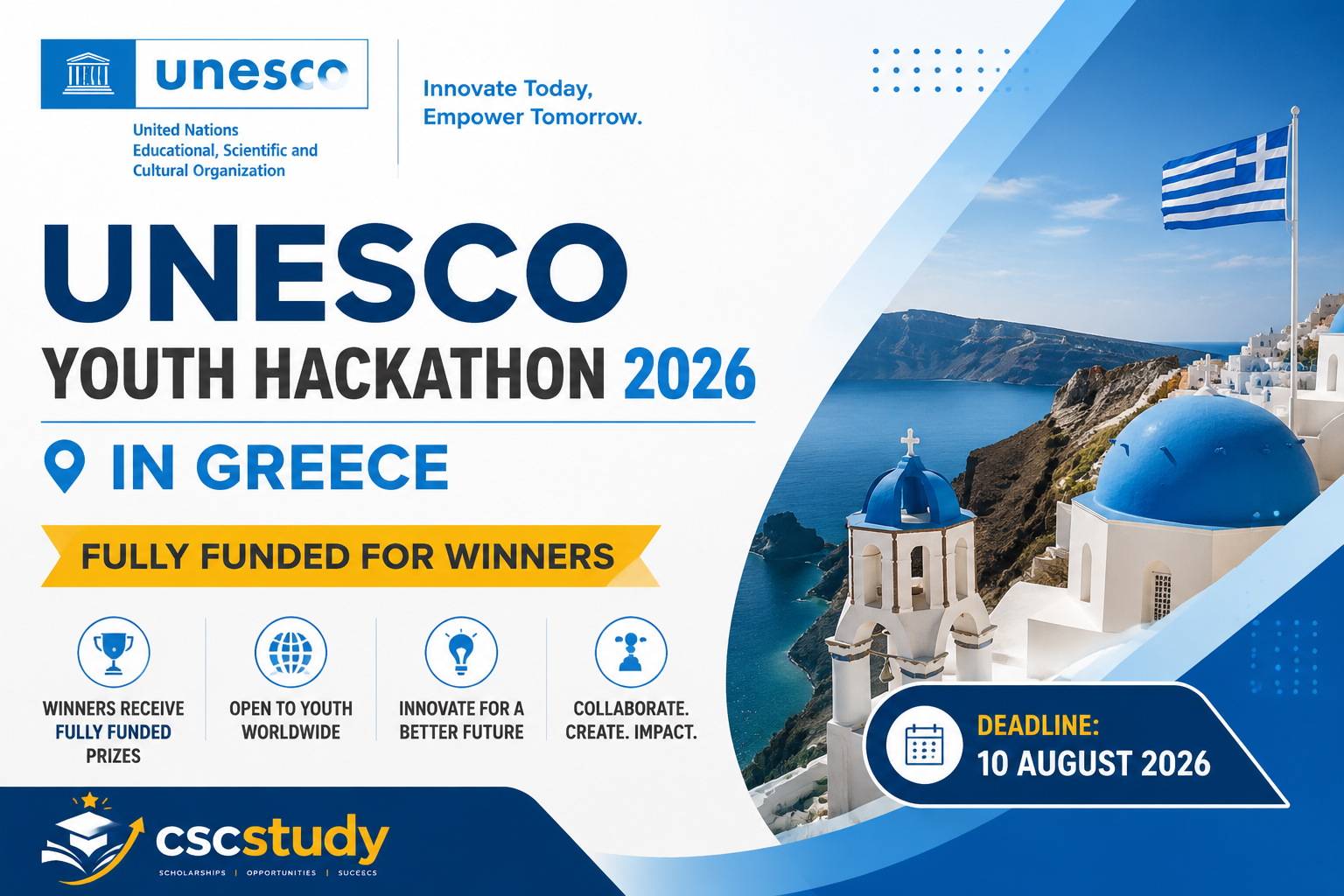
Applications are open for the UNESCO Youth Hackathon 2026, an international competition for young people interested in Media and Information Literacy, artificial intelligence, education, digital innovation, and community impact. The program is organized by UNESCO and invites young people aged 18 to 30 from all countries to participate in teams of 2–6 members. The 2026 theme is “Play Your Part: Youth Designing the Future of Media and Information Literacy.”
Four winning teams will be selected. Two representatives from each winning team will receive funded travel to Thessaloniki, Greece, to attend the Voices European Festival of Journalism and Media Freedom from 26–28 November 2026.
Key Details About the UNESCO Youth Hackathon 2026
- Organizer: UNESCO
- Location: Thessaloniki, Greece
- Age Requirement: 18–30 years
- Team Size: 2–6 members
- Winning Teams: 4
- Event Dates: 26–28 November 2026
- Funding: Flight, accommodation, and meals for 2 representatives per winning team
- Deadline: 16 August 2026
What is the UNESCO Youth Hackathon 2026?
The UNESCO Youth Hackathon 2026 is a global youth competition focused on developing innovative solutions related to Media and Information Literacy (MIL).
The hackathon encourages young people to address challenges involving misinformation, artificial intelligence, digital participation, education, communication, and community engagement.
Participants do not need to be programmers. Projects can include apps, websites, games, podcasts, campaigns, videos, educational tools, community projects, or other innovative solutions.
UNESCO Youth Hackathon 2026 Theme
The official theme is:
“Play Your Part: Youth Designing the Future of Media and Information Literacy.”
Participants can develop projects under areas such as:
- AI and Media and Information Literacy
- MIL Education
- Community Impact
- Youth Engagement
- Open Track
Benefits of the UNESCO Youth Hackathon 2026
Four winning teams will be selected.
For 2 representatives from each winning team, UNESCO will provide:
- Funded flights to Greece
- Accommodation
- Meals
- Participation in the Voices Festival
- International project exposure
- Networking opportunities
- Expert guidance
The funding applies to two representatives from each winning team, not to every applicant.
Who Can Apply?
Applicants must meet the following requirements:
- Be between 18 and 30 years old
- Apply in a team of 2–6 members
- Applicants from all countries can participate
- National and international teams are accepted
- Technical or coding experience is not required
- Teams should support UNESCO values
- Gender balance and inclusion are encouraged
What Type of Projects Can Be Submitted?
Applicants can submit different types of innovative projects, including:
- Mobile applications
- Websites
- Games
- Podcasts
- Radio programs
- Short videos
- Documentaries
- Comics
- Educational toolkits
- Awareness campaigns
- Community initiatives
- AI-related solutions
Projects should address a challenge connected to Media and Information Literacy.
Required Documents and Submission Materials
Applicants need to prepare the following:
Project Proposal
The proposal should include:
- Team information
- Problem statement
- Project objectives
- Proposed solution
- Target audience
- Project concept
- Feasibility
- Sustainability
- Expected impact
The proposal must be submitted in English.
Accepted formats are PDF or Word, with a maximum file size of 10 MB.
Pitch Video
Applicants must submit a pitch video of up to 3 minutes.
The video should explain:
- The problem
- The proposed solution
- How the solution works
- Target audience
- Innovation
- Expected impact
Videos can be recorded in another language, but English subtitles are required.
Selection Criteria
Projects will be evaluated based on:
- Relevance to the 2026 theme
- Innovation and creativity
- Clarity
- Feasibility
- Sustainability
- Potential impact
- Inclusion
- Alignment with Media and Information Literacy principles
Important Dates
- Call for Participation: From 15 June 2026
- Project Submission: 6 July–16 August 2026
- Global Evaluation: 18 August–13 September 2026
- Winner Announcement: 13–18 September 2026
- Final Event in Greece: 26–28 November 2026
How to Apply for the UNESCO Youth Hackathon 2026
The application process is online.
Follow these steps:
- Form a team of 2–6 members.
- Select a challenge area.
- Develop your project idea.
- Prepare the project proposal.
- Record a maximum 3-minute pitch video.
- Complete the online submission form.
- Upload the required materials.
- Submit before 16 August 2026 at 23:59 Paris Time.
Applicants should apply through the official UNESCO Youth Hackathon 2026 webpage and check the official instructions before submitting.
Leave a Reply